

From Les Hauts de Sauliès, set off along the roads of Célé and Lot for a day of discovery and serenity. From the Romanesque ruins of Marcilhac-sur-Célé to the medieval streets of Figeac, via the hilltop village of Capdennac-le-Haut, this itinerary invites you to explore places where history, stone, and light combine to create an authentic and soothing journey in the heart of Quercy.
- Marcilhac-sur-Célé – 34 minutes
- Figeac – 32 minutes
- Lunch at La Dinée du Viguier
- Capdennac le Haut – 10 minutes
- Les Hauts de Sauliès – 54 minutes
Marcilhac-sur-Célé – Travel time: 34 min
Nestled in the Célé Valley, Marcilhac-sur-Célé harmoniously combines heritage and nature. Dominated by the majestic ruins of its Benedictine abbey, this medieval village reveals its picturesque streets, old houses, and atmosphere steeped in spirituality and history.
📖 Visitor’s Guide
Saint Peter’s Abbey
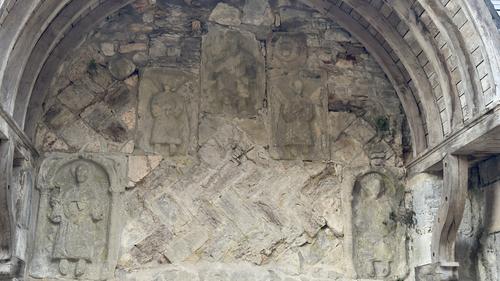
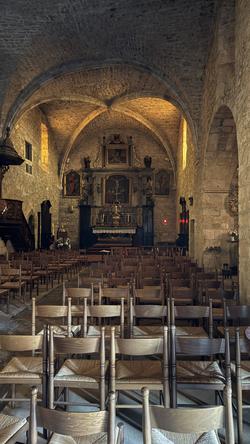
Founded in the 10th century, Saint-Pierre Abbey is a jewel of Romanesque art, famous for its tympanum depicting Christ blessing and its sculpted capitals. Ravaged and rebuilt several times, it now houses remarkable 17th-century woodwork, a Baroque pulpit, and a chapel decorated with murals, bearing witness to the faith and skill of medieval builders.
Chapter house
The last vestige of the convent building, the chapter house houses an exceptional 12th-century sculpted decoration illustrating the struggle between good and evil. Formerly used as a barn and then rediscovered in the 20th century, it remains a precious witness to Romanesque symbolic art and monastic life in Marcilhac.
Ramparts and the Abbot’s House
The 14th-century fortifications protected the abbey and the village within an enclosure with four gates. All that remains of this defensive structure are a few sections of wall and the abbot’s house, which was partially destroyed by fire in the 18th century but can still be seen in the center of the village.
King’s House
Built in the 15th century within the abbey walls, the Maison du Roy was probably used to accommodate visiting guests. Today, it houses a museum of sacred art, exhibiting polychrome statues, paintings, and liturgical objects from the 13th to the 17th centuries—a place steeped in history and emotion that is not to be missed.


💡 Suggestion: If you are feeling brave and are well equipped, you can follow the Caselles trail (6.7 km – approx. 2 hours). On the plateau overlooking the valley, the Caselles nature reserve reveals an exceptional rural heritage. These 19th-century dry stone huts, testament to local farming expertise, blend into a preserved landscape where nature and history merge. Classified as a Sensitive Natural Area, the site invites visitors to explore while reminding them of the importance of respecting and protecting these fragile environments.
📖 Caselles trail
Figeac – Travel time: 32 min
Nestled in the heart of the Célé Valley, Figeac charms visitors with its cobbled streets, half-timbered houses, and Gothic palaces. Once a thriving merchant town, it now combines heritage with modernity. The birthplace of Jean-François Champollion, it is listed as one of France’s Most Beautiful Detours and shines as a City of Art and History.
📖 Visitor’s Guide
💡 Suggestion: The Figeac Tourist Office provides a map of the town. Don’t hesitate to ask for one.
Champollion Museum – The World’s Writings
Housed in Jean-François Champollion’s birthplace, the museum recounts the great adventure of writing, from hieroglyphics to modern alphabets. Its copper facade, pierced with a thousand characters, symbolizes the universality of language, and its collections display objects, manuscripts, and an authentic Egyptian mummy.
Champollion Square and Writings Square
Surrounding Champollion’s birthplace, the medieval square reveals its beautiful residences, including the 12th-century Maison du Griffon. Just behind it, the Place des Écritures features a monumental reproduction of the Rosetta Stone by Joseph Kosuth, a poetic tribute to the decipherer of hieroglyphics.
Carnot Square and the market
Under its 19th-century metal market hall, Place Carnot comes alive every Saturday morning for the large Figeac market. It is a festival of Lot flavors—cheeses, melons, foie gras, saffron, wines, and fouace bread—where producers, residents, and visitors mingle in a friendly atmosphere.
Saint-Sauveur Abbey
Founded in the 9th century, Saint-Sauveur Abbey is the birthplace of the town. Built on the model of Conques, it combines Romanesque and Gothic architecture. Inside, the Notre-Dame de Pitié chapel, a preserved medieval gem, houses remarkable woodwork and stained glass windows where faith, history, and art intersect.
Church of Our Lady of Le Puy
Built in the 13th century on a hill overlooking the town, Notre-Dame du Puy offers a splendid view over the rooftops of Figeac. It houses the largest Baroque altarpiece in the Lot region, dedicated to the Virgin Mary, and perpetuates the legend of the hawthorn flower, a divine sign of its foundation.
Castle of the Viguier du Roy
Former residence of the representative of the King of France, the Château du Viguier du Roy (14th century) watches over the medieval city. Now converted into a charming hotel, it retains its Gothic courtyard, French gardens, and cloister, true architectural gems.
Lunch – La Dinée du Viguier Restaurant (Figeac)
Located in the majestic guard room of the Château du Viguier du Roy, La Dinée du Viguier offers refined bistronomic cuisine inspired by seasonal produce and local Lot specialties. Under the direction of a creative chef, this restaurant combines history, elegance, and culinary pleasure in the heart of Figeac.
Telephone: +33 (0)5 65 50 05 05
Capdennac le Haut – Travel time: 10 min
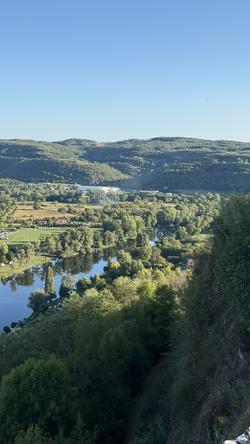
Four kilometers from Figeac, Capdenac-le-Haut overlooks a majestic bend in the Lot River from a height of 100 meters. This hilltop village, occupied since Neolithic times and fortified in the Middle Ages, offers exceptional views and preserves many historical remains that bear witness to its Gallic and medieval past.
📖 Visitor’s Guide
Dungeon or Tower of Modon
Dating back to the 14th century, the keep of Capdenac, symbol of feudal power, overlooks the valley like a guardian of time. In summer, its terrace offers a spectacular panoramic view of the Lot valley and the village rooftops.
Church of Saint John the Baptist
Rebuilt in 1722 after the Wars of Religion, the Church of Saint John the Baptist houses an 18th-century Renaissance altarpiece and a statue of Saint Géraud carrying the citadel in his arms—a moving symbol of protection and faith.
Gate of Gergovia
A remnant of the medieval defense system, the Gergovie Gate is one of the few to have stood the test of time. It once opened onto a drawbridge that has since disappeared, replaced by a hanging garden offering a splendid view of the valley.
Fountain of the English
Carved into the rock and fortified, the Anglais troglodytic fountain ensured the water supply during sieges. Accessible via 120 steps carved into the stone, it offers an unusual visit and a bird’s eye view of the Lot valley.
Return to Les Hauts de Sauliès – Travel time: 54 min
Book your stay now
Our charming rooms | Our Commitment to Responsible Tourism | Other itineraries from Les Hauts de Sauliès | Online booking
Useful links:
-
Getaway in the Lot Valley: Art, Nature, and Charming Villages from Les Hauts de Sauliès
From Les Hauts de Sauliès, experience an exceptional day in the Vallée du Lot, a charming territory where heritage, art, and nature intertwine. This itinerary takes you through medieval villages, art museums, hanging gardens, and historic castles, for a total immersion in the soul of Quercy.
-
Journey to the Heart of the Lot: Remarkable Caves, Villages, and a Château from Les Hauts de Sauliès
From Les Hauts de Sauliès, set off on a captivating getaway into the heart of the Regional Natural Park of the Causses du Quercy, where art, history, and preserved nature meet. This one-day itinerary will take you through the decorated caves of Pech Merle, true prehistoric sanctuaries, to the hanging village of Saint-Cirq-Lapopie, a medieval…
-
Cahors between stone and river: heritage, flavors, and gardens from Les Hauts de Sauliès
The capital of the Lot department, Cahors is a city with a thousand years of history, nestled in a bend of the Lot River. It is famous for its medieval heritage, its black wine with powerful aromas, and its southern lifestyle. The city combines architecture, culture, gastronomy, and nature, between medieval streets and river landscapes.Visitor’s…
-
Between heaven and earth: Padirac, Autoire, and Loubressac, jewels of the Lot region from Les Hauts de Sauliès
From Les Hauts de Sauliès, set off to discover some of the Lot’s greatest treasures. From the mystical depths of the Gouffre de Padirac to the hanging villages of Autoire and Loubressac, this itinerary immerses you in a setting where stone, water, and light interact in harmony. Padirac Cave – Travel time: 58 min The…
-
Stone and light: Carennac, Martel, and Rocamadour from Les Hauts de Sauliès
From Les Hauts de Sauliès, explore three gems of the Lot: the Romanesque tranquility of Carennac, the medieval elegance of Martel, and the sacred majesty of Rocamadour. Between cliffs, bell towers, and golden stone alleyways, this itinerary combines unspoiled nature, living heritage, and authenticity. Carennac – Travel time: 1 hour 10 minutes Carennac is a…
-
Treasures of Quercy: Concots & the Cloup d’Aural phosphate mines from Les Hauts de Sauliès
From Les Hauts de Sauliès, set off on a fascinating getaway to the heart of the Causses du Quercy Regional Natural Park. Discover the medieval village of Concots, its rural heritage and authenticity, before enjoying a gourmet break at the Lou Bourdié inn, an iconic address in the Lot region. Finish by exploring the Phosphatières…
-
Moissac, Lauzerte & Montcuq: cloisters and bastides of Quercy | Les Hauts de Sauliè
From Les Hauts de Sauliès, travel through the Romanesque elegance of Moissac, the medieval poetry of Lauzerte, and the sunny charm of Montcuq. An itinerary where the stone, art, and landscapes of Quercy Blanc cultivate refinement, nature, and authenticity. Moissac – Travel time: 1 hour 10 minutes A city of art and history on the…
-
Between abbeys and hidden valleys: Marcilhac, Figeac, and Capdennac from Les Hauts de Sauliès
From Les Hauts de Sauliès, set off along the roads of Célé and Lot for a day of discovery and serenity. From the Romanesque ruins of Marcilhac-sur-Célé to the medieval streets of Figeac, via the hilltop village of Capdennac-le-Haut, this itinerary invites you to explore places where history, stone, and light combine to create an…
-
In the footsteps of medieval Quercy: Saint-Céré & the Château de Castelnau-Bretenoux from Les Hauts de Sauliès
From Les Hauts de Sauliès, take the road north of the Lot to discover Saint-Céré, a city of art and history with lively streets and medieval charm, before reaching the Château de Castelnau-Bretenoux, an imposing red stone fortress overlooking the Dordogne valley. Saint-Céré – Travel time: 1 hour Nestled in the north of the department,…
-
Highlights of the Tarn and Aveyron regions: Saint-Antonin-Noble-Val, Penne, and Cordes-sur-Ciel from Les Hauts de Sauliès
From Les Hauts de Sauliès, set off to discover the medieval gems of the Tarn and Aveyron regions. From Saint-Antonin-Noble-Val, nestled in a spectacular valley, to the fortress of Penne, perched on its rocky outcrop, to the hilltop town of Cordes-sur-Ciel, this itinerary combines history, art, and nature. Saint-Antonin-Noble-Val – Travel time: 58 min Nestled…
-
Cities steeped in history and soul: Villefranche-de-Rouergue & Villeneuve-d'Aveyron from Les Hauts de Sauliès
From Les Hauts de Sauliès, set off to explore the bastides and sauvetés of Rouergue, witnesses to a Middle Ages that was both spiritual and commercial.In Villefranche-de-Rouergue, let yourself be enchanted by the arcades of Place Notre-Dame, the splendor of the Chartreuse Saint-Sauveur, and the baroque fervor of the Chapelle des Pénitents Noirs.Continue on to…
-
On the trails of Rouergue: Caylus, Beaulieu Abbey, and Najac from Les Hauts de Sauliès
From Les Hauts de Sauliès, take the road to medieval Rouergue, a land of history and light.From Caylus, a market town with Gothic facades and arcaded squares, to the Cistercian Abbey of Beaulieu-en-Rouergue, a spiritual center that has become a hub for contemporary art, to Najac, a hilltop village overlooking the Aveyron Gorges, this itinerary…
-
Getaway between Périgord and Quercy: Sarlat, Souillac, and Lacave Cave from Les Hauts de Sauliès
From Les Hauts de Sauliès, set off for an unforgettable day at the crossroads of Périgord Noir and Quercy.From the medieval town of Sarlat, a jewel of architecture and art de vivre, to Souillac, gateway to the Lot and bastion of Romanesque art, to the magical caves of Lacave, this itinerary combines heritage, gastronomy, and…
-
Trails and paths of Quercy: walking routes from Les Hauts de Sauliès
From Les Hauts de Sauliès, set off to explore paths carved into the stone and light of the Lot.These hiking trails take you through medieval villages, green valleys, and limestone plateaus, offering sublime panoramic views and the silence of ancient paths.Whether it’s accessible walks around Vers, sporting adventures in the Célé valley, or legendary crossings…
-
Lights of Rouergue: Conques, a Romanesque gem on the Way of St. James from Les Hauts de Sauliès
From Les Hauts de Sauliès, set off to discover Conques, a medieval gem listed as a UNESCO World Heritage Site and an iconic stop on the Way of St. James.Perched on the mountainside and bathed in light, this village in the Rouergue region captivates visitors with its pure architecture, intense Romanesque art, and serene cobbled…
Discover more from Les Hauts de Sauliès
Subscribe to get the latest posts sent to your email.